yosemite animals
animals of the sierra nevada: bat
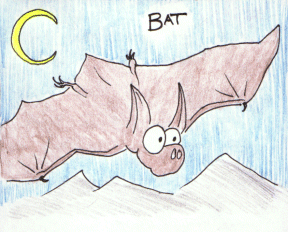
- A bat’s wings are so thin you can read through them.
- Baby bats hang on to their mothers’ backs during hunting, the mother bat cleans her babies daily by licking them.
- Bats drink water by flying over lakes and streams and scooping water into their mouths.
Mar 05
- bats, yosemite animals
animals of the sierra nevada: yellow bellied marmot
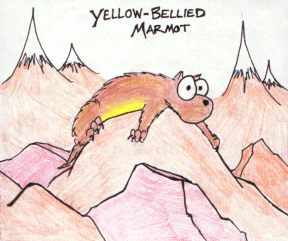
- The marmot is the biggest member of the squirrel family.
- It likes to lounge around with its belly on a rock all day.
- Marmots make a loud chirp noise when danger approaches, all nearby animals will run for cover at this warning.
Mar 05
- yellow bellied marmots, yosemite animals
animals of the sierra nevada: meadow mouse
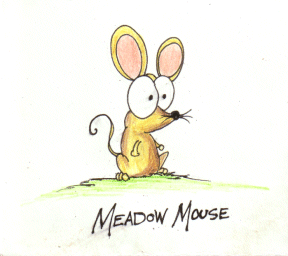
- The meadow mouse eats its weight in food every 24 hours.
- Meadow mice protect their territory and will fight any mouse that comes into it.
- A female meadow mouse will have around 50 babies a year.
Mar 05
- mice, yosemite animals
animals of the sierra nevada: western pond turtle
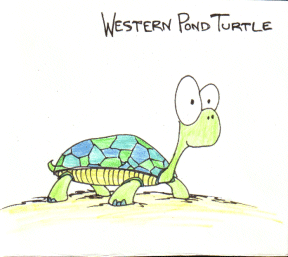
- This is the only species of turtle in the Sierra Nevada.
- They live in the lowest elevations, in the foothills.
- Female turtles lay about 10 eggs every spring.
Mar 05
- turtles, yosemite animals
animals of the sierra nevada: mountain lion
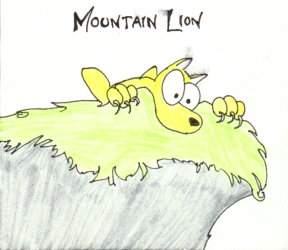
- Mountain lions can weigh about 200 pounds and are about 8 feet in length (including tail).
- To find a mate, the male scratches bare spots on the ground. If the female finds the scratches acceptable, they pair up.
- The male leaves before his kittens are born, which is good because he will eat them if given the chance.
Mar 05
- mountain lions, yosemite animals
animals of the sierra nevada: porcupine
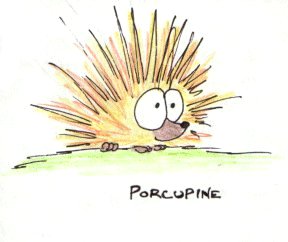
- The porcupine is probably the most relaxed animal in the Sierra Nevada, because it doesn’t have to worry about predators.
- Each porcupine has about 20,000 to 30,000 quills.
- The porcupine’s favorite food is bark.
Mar 05
- porcupines, yosemite animals
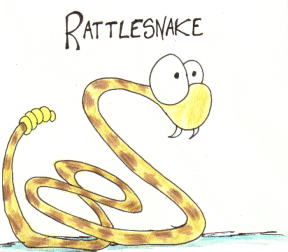
animals of the sierra nevada: rattlesnake